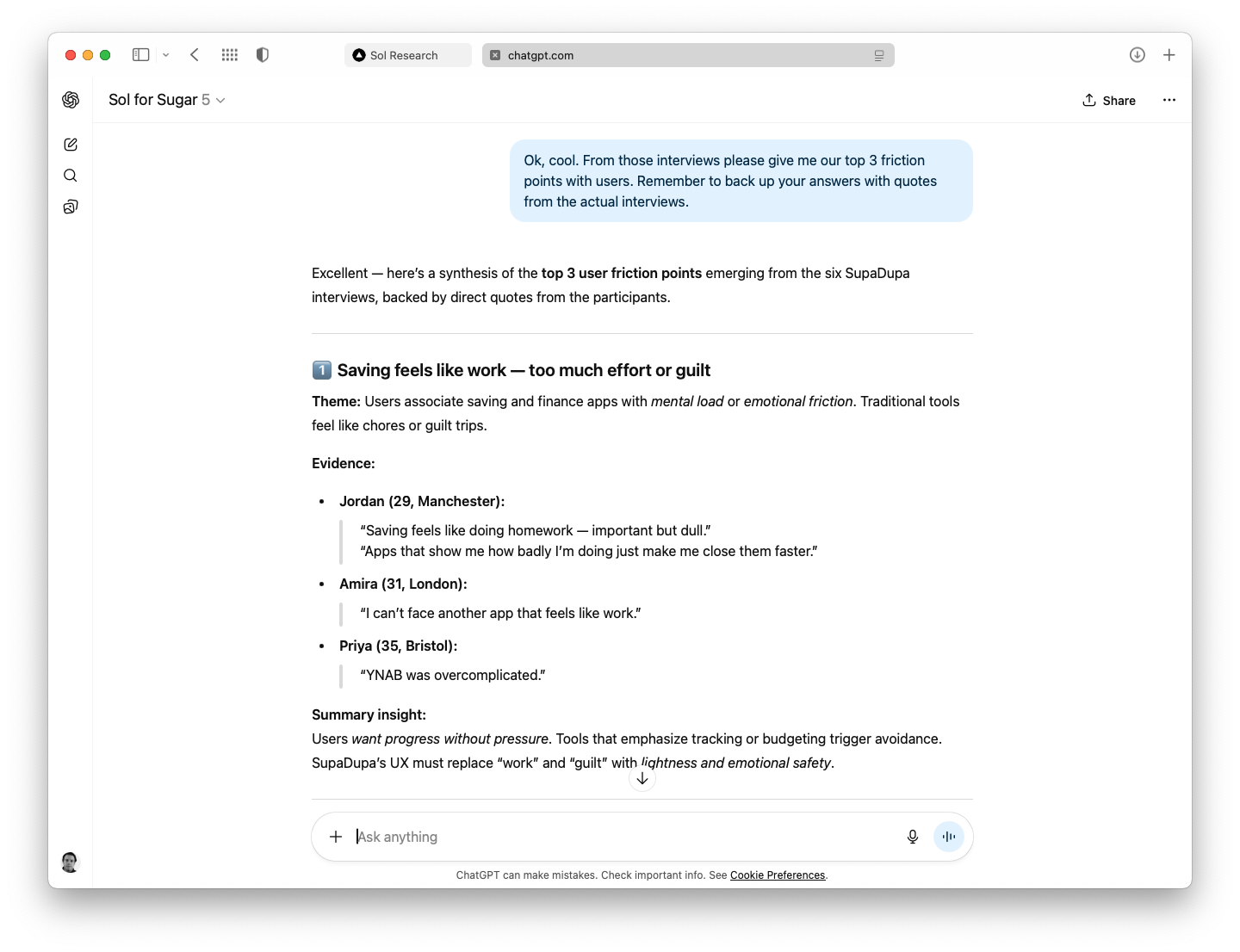
Direct conversation with research data through ChatGPT integration
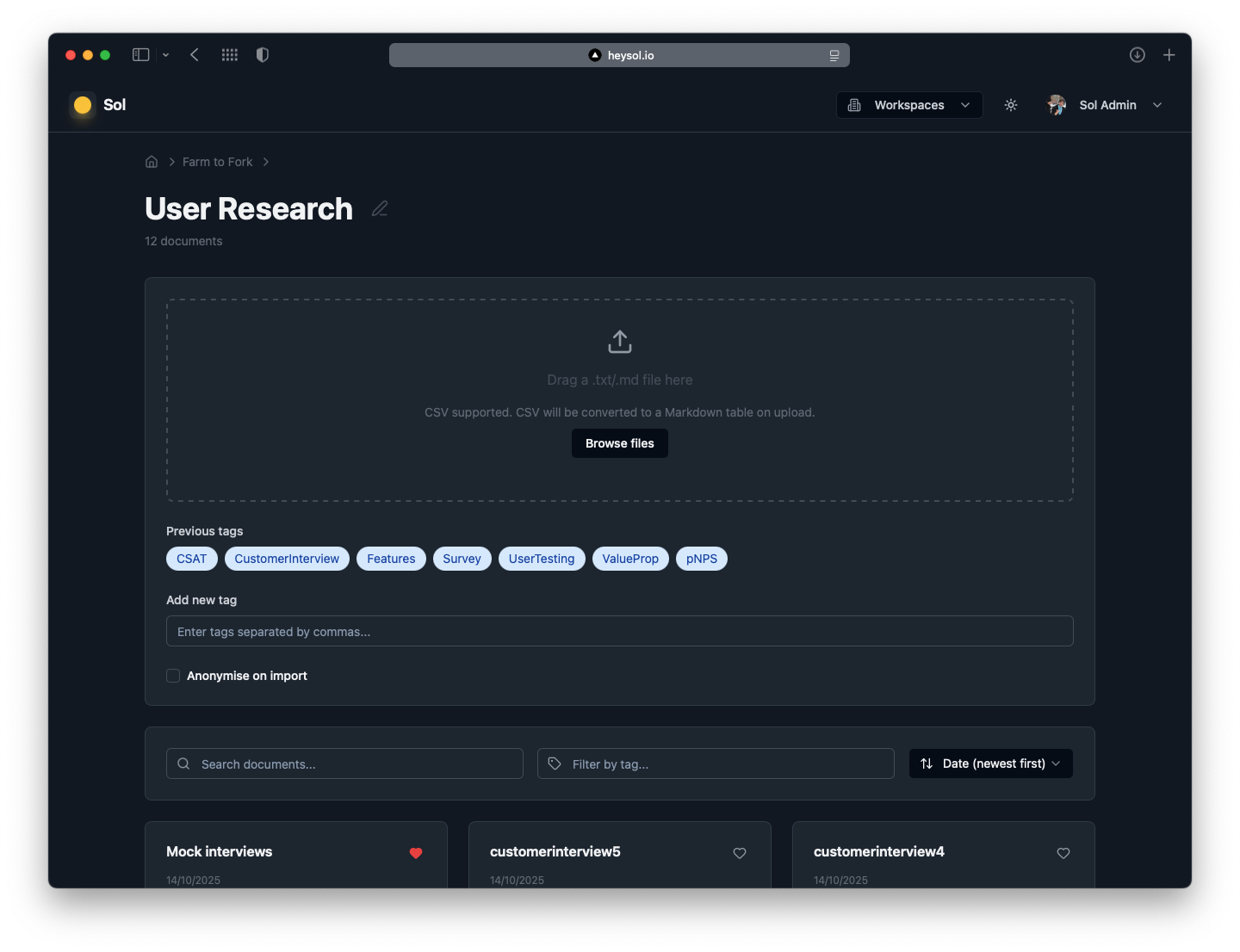
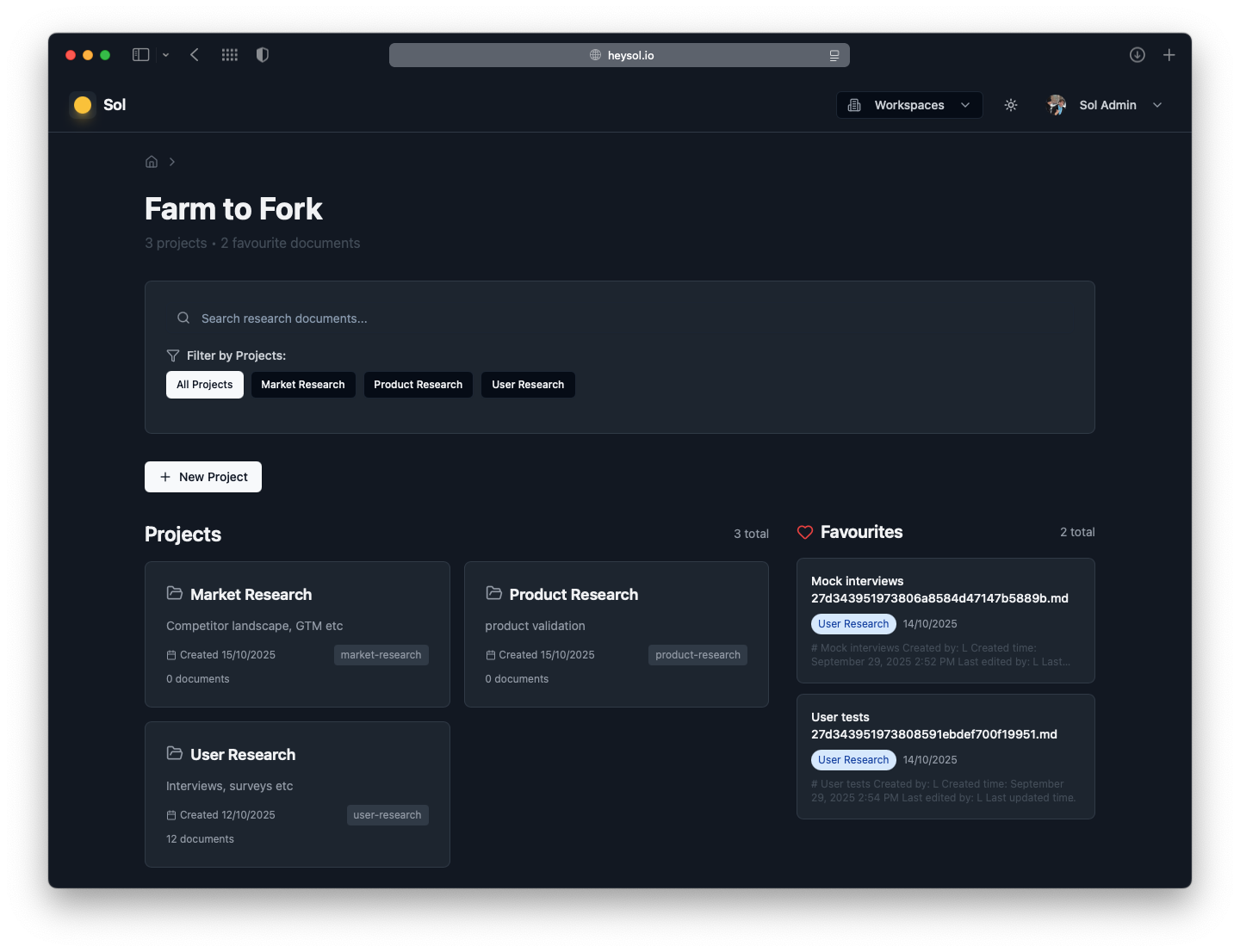
Sol is an AI-enabled research platform I built to explore how teams can connect their qualitative data directly to AI.
It acts as an always-on pulse of customer truth — centralising interviews, surveys, and field notes into a living system that's searchable, tagged, and queryable in plain English.
Anyone in an organisation can ask Sol a question — "What do customers find most frustrated about onboarding?" — and get instant, trustworthy answers drawn from real research, not assumptions.
This was never about building a commercial product; it was a design-led experiment in how AI can democratise research, accelerate discovery, and keep the customer's voice present in every decision.
Direct conversation with research data through ChatGPT integration
As teams scale, research knowledge often fragments across files, decks, and tools. Insights become hard to find, harder to trust, and almost impossible to reuse.
I wanted to see how far AI could go in solving that — not through another dashboard, but through a genuinely intelligent system that makes research accessible to everyone.
Working solo in Cursor, I designed and built a multi-tenant SaaS platform from the ground up using Next.js 15, PostgreSQL, and a Fly.io-hosted MCP server for AI integration.
Deployed across Vercel (frontend) and Fly.io (AI server), Sol runs with full SSL, connection pooling, and role-based security — a functioning SaaS platform ready for enterprise use.
Building Sol taught me that the future of research isn't more documentation — it's living knowledge.
By bridging UX, data architecture, and AI integration, I've seen how design leaders can create systems that scale understanding, not just output.
Sol was my way of asking:
"What happens when everyone in an organisation can talk directly to their own research?"
The answer, I think, is a more informed, more empathetic product culture.
| Layer | Tools |
|---|---|
| Frontend | Next.js 15, TypeScript, Tailwind, shadcn/ui, Framer Motion |
| Backend | Next.js API Routes, PostgreSQL / SQLite |
| AI Integration | MCP Server (Fly.io), Organisation-scoped API keys |
| Auth & Security | NextAuth.js, bcryptjs, RBAC, middleware protection |
| Hosting | Vercel (app), Fly.io (MCP), custom domain + SSL |
| DX & Testing | Health suite, seed scripts, TypeScript strict mode |
"Sol is a design experiment brought to life in code.
It embodies how I think about AI, systems design, and the future of research: hands-on, responsible, and deeply human."
I help organisations turn research into strategy, strategy into design, and design into measurable outcomes. My recent work focuses on AI-enabled workflows, accessibility, and empowering design teams to operate with clarity and confidence.